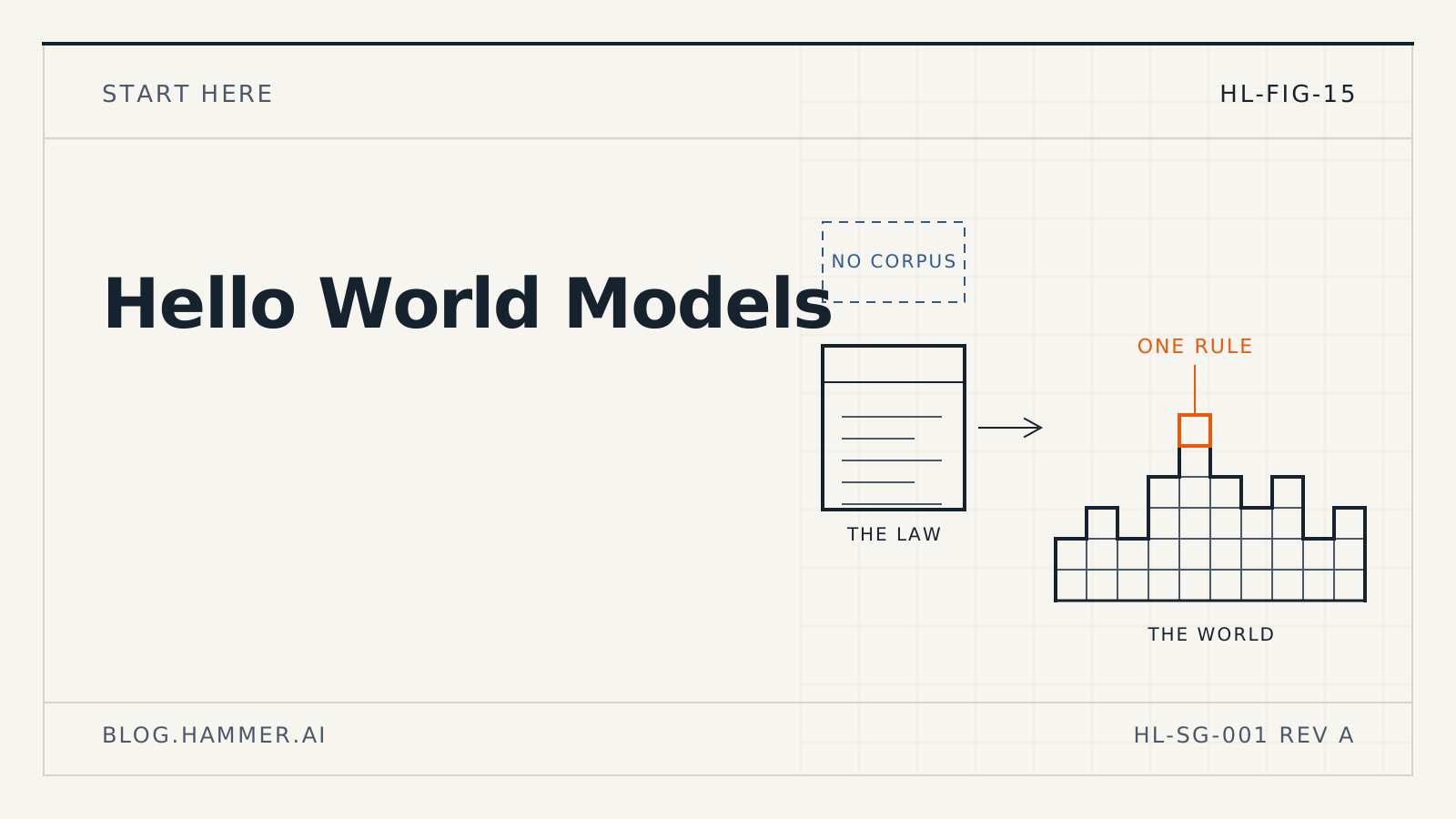
This is the front door to the Hello World Models series: building AI you can actually defend in a regulated job, like lending, by borrowing how video games build worlds. Here's the story, then where we're going.
The story
At Hammer we have spent a long time building agents for regulated spaces: lending, compliance, the kinds of decisions that come with real laws attached. And we kept hitting the same wall: you can’t get a ton of data. The good data is private, locked up, expensive, or simply doesn’t exist for the case you care about. The consumer-AI playbook, pour in an ocean of examples and let the model soak up the world, just isn’t on the table here.
So we started looking at world models, the idea of letting an agent learn inside a simulation instead of on real customers. Promising. But it stalled on one hard question: how do you actually build a world model for a regulated domain? A learned world model needs, again, mountains of data to learn the world from. We were right back where we started.
Then the aha: what if we build the world the way games do? Games conjure enormous, believable, endlessly varied worlds without a data set at all. They generate them from a handful of rules plus a little randomness. Nobody records a million caves; you write the rules for caves and the caves fall out.
This is not a tourist’s interest, for what it is worth. Before I built AI for regulated industries, I built games. I led SDL Perl, the game-development toolkit for the Perl community, co-wrote the book on it (a free PDF manual funded by The Perl Foundation), wrote for the Perl gaming community, and maintained classics like Frozen Bubble. I never stopped: I built Unigatchi, a Tamagotchi-style virtual pet for the Crypto Unicorns game (since sunset), and today I am building Primus at Multiversal. So when I talk about games generating worlds from rules, I am talking shop, not borrowing a metaphor I read somewhere.
And here’s the part that makes it click for regulated work: we already have the laws of the world. We don’t have to guess the rules of lending from piles of data, the rules are written down, they’re the regulations. So we can author the world straight from the known laws, drop agents into it, and let them learn where it’s safe to fail.
What the series explores
This series follows that idea end to end, and stays honest about the engineering:
- Worlds from rules. How a few procedural rules grow a whole world, and even life that adapts to it. (that’s Part 1, with things you can poke)
- Good worlds vs. pretty ones. What games know about building worlds that actually drive an agent’s behavior: delayed, coupled, shifting consequences.
- Policies you can read. Having the AI write a clear, checkable rulebook instead of deciding every case live and unexplainably.
- The costs. A business loss function that scores the real bill, compute, labor, and reputation, not just accuracy, and the tradeoffs between them.
- When the rules move. Regulations change; the honest metric is how cheaply the system adapts.
- A game you can play. All of it becomes a playable world, and then the reveal: the toy was the real thing all along.